Data systems are the backbone of public services in many African countries, but using one-dimensional categories (like “woman” or “youth”) creates the Identity Trap, failing to account for the multiple, compounding factors that affect people’s lives.

To reflect this real-world complexity and mitigate new risks, developing data governance frameworks through an intersectionality lens is essential.

Click on each identity to see how using one-dimensional categorisation can fail to protect or better structure support by targeting individuals living at the crossroads of multiple forms of disadvantage.

Youth

Youth

Identity trap:

Every young person is tech-savvy or able to benefit from digital programs
Missing? (Click to flip card)

What’s missing:

A digital skills programme aimed at “youth” may assume all young people have smartphones and can read the national language. A rural teenage girl, who is also caring for siblings and has limited literacy, may never be able to participate, her intersecting challenges are unaccounted for.
Assumption Made (Click to flip card)
Lives in a rural setting

Lives in a rural setting

Identity trap:

People living in rural settings are all low-income and/or have reduced access to technology
Missing? (Click to flip card)

What’s missing:

A rural elderly man who is financially stable is denied credit or financial products because banks and microfinance schemes use income and creditworthiness benchmarks based on urban salaried employment. Rural income often comes from informal or seasonal sources (like smallholder farming, trading, or remittances), which may not appear in official records.
Assumption Made (Click to flip card)
Woman

Woman

Identity trap:

“Woman” is treated as the main barrier, without recognising other overlapping constraints
Missing? (Click to flip card)

What’s missing:

A loan program for “women entrepreneurs” uses credit histories to determine eligibility. A woman who is undocumented, runs an informal business, and rotates SIM cards to manage airtime costs has fragmented data trails. The system reads her as “unbankable,” even though she is economically active.
Assumption Made (Click to flip card)
Person living with a Disability

Person living with a Disability

Identity trap:

Disability is assumed to be easy to identify and evenly recorded across different contexts
Missing? (Click to flip card)

What’s missing:

If households in rural areas are rarely visited by enumerators or lack facilities that accurately record and report disability status, young people with disabilities end up being under-represented in datasets used for planning. Because they are statistically unaccounted for, they could miss being targeted for youth employment initiatives, digital skills programmes, school accessibility upgrades, and social protection schemes.
Assumption Made (Click to flip card)
Migrant

Migrant

Identity trap:

All migrants have the same needs and legal status.
Missing? (Click to flip card)

What’s missing:

“Migrant” status may qualify someone for temporary shelter, but if they are also elderly or living with a disability, they may not receive accessible housing or targeted health services, since the system only considers their migration status.
Assumption Made (Click to flip card)
Informal Worker

Informal Worker

Identity trap:

All informal workers are low-skilled, equally precarious, and have the same barriers
Missing? (Click to flip card)

What’s missing:

A single label like “informal worker” hides enormous diversity. For instance, consider a woman selling goods across regional borders who is also a single parent and does not fluently speak the majority language. Income surveys may capture her earnings, but not the realities that shape her economic exclusion.
Assumption Made (Click to flip card)
Low-income

Low-income

Identity trap:

Everyone with a low income faces the same challenges
Missing? (Click to flip card)

What’s missing:

Programs that target “the poor” often distribute benefits based on household income. A low income family supporting a child with a disability may not benefit in an equitable fashion because extra costs (assistive devices, special care services) may not be considered in income-based assessments.
Assumption Made (Click to flip card)
Language Minority

Language Minority

Identity trap:

Services are offered in the “main” language(s) and language isn’t seen as a major barrier
Missing? (Click to flip card)

What’s missing:

Education programs may reach “minorities” but only in the dominant language. A student who speaks a minority language and/or has a hearing impairment misses out, because language and disability are rarely combined in service design.
Assumption Made (Click to flip card)
Religious Minority

Religious Minority

Identity trap:

Religious status does not influence service uptake and, therefore, is not considered
Missing? (Click to flip card)

What’s missing:

Social welfare support may be available to “religious minorities,” but a religious minority woman who is also an informal worker may not benefit if support is provided only through male community leaders, or if her work status isn’t recognized.
Assumption Made (Click to flip card)

What is Intersectionality?

Definition

in·ter·sec·tion·al·i·ty /ˌin.tə.sɛk.ʃəˈnæl.ə.ti/ (noun)

Intersectionality is an intellectual framework for understanding how various aspects of individual identity, including race, gender, social class, and sexuality, interact to create unique experiences of privilege or oppression

Rather than treating social categories separately, intersectionality looks at how they combine to create unique forms of exclusion or harm.

— Kimberlé Crenshaw

Origin

Dimensions of Intersectionality

Structural Intersectionality

In her analysis, Dr. Crenshaw notes that “structural intersectionality” refers to how social structures and institutions are often ill-equipped to address the compounded realities of those who occupy multiple marginalised identities. For example, she describes how women of color seeking shelter from domestic violence often face barriers not encountered by white women, such as language obstacles, immigration status issues, and the lack of culturally responsive services. These structural deficiencies mean that “the needs of women who are at the intersection of race and gender often go unmet.”

Relation to Data Governance in Africa

Across the continent, digital ID systems are presented as gateways to modern life. They promise legal recognition, the ability to authenticate oneself, access to government services, and participation in the formal economy. Kenya and Nigeria, for example, have embraced universal registration and have goals to enrol every resident, including children, into national digital ID systems. In theory this supports more efficient service delivery and better planning. Yet this promise relies on a fragile assumption that people already possess, or can easily obtain, the documents required to enrol in the first place.

According to Research ICT Africa, a significant number of rural and low-income households do not have primary registration documents, particularly birth certificates and other foundational papers essential for digital ID enrolment. For those without documents, an alternative pathway sometimes exists, such as travelling to a central office to swear an affidavit. This option tends to work for undocumented individuals who are mobile and can afford the trip. For people with limited mobility, some systems offer a flexible arrangement where a documented relative is allowed to complete parts of the registration process on their behalf. This approach supports disabled citizens who already possess the paperwork needed to authenticate a family link.

Structural Example

Consider an individual who is both without proper documentation and living with reduced mobility, or someone living with two intersecting identities that exacerbate their state of marginalisation. Neither alternative is ideal for them. They likely cannot travel to the capital to swear an affidavit due to prohibitive costs, and they cannot designate a relative because their entire household lacks formal papers. These two disadvantages reinforce one another.

Political Intersectionality

Dr. Crenshaw describes how political intersectionality refers to how women of color are rendered invisible when the advocacy agendas of groups they belong to, such as anti-racist movements and feminist movements, treat race and gender as mutually exclusive terrains. This forces individuals to split their political energies between sometimes opposing agendas, where the “raced” experience is defined by men of color and the “gendered” experience is defined by white women. For instance, activists and the LAPD were reluctant to release domestic violence statistics by precinct because of conflicting political fears. Anti-racist advocates feared the data would reinforce stereotypes of minority communities as “pathologically violent,” while feminist advocates worried it would allow society to dismiss domestic violence as merely a “minority problem” rather than a systemic issue affecting all women. In the end, the strategic silence of both movements effectively erased the specific needs of women of color who were actually experiencing the violence.

Relation to Data Governance in Africa

Political Example

In today’s data governance landscape in Africa, this could manifest as a direct conflict between Digital Rights and Gender Safety movements. A Digital Rights movement would likely prioritise total anonymity and encryption to protect activists from state surveillance. Simultaneously, a Gender Safety movement might advocate for real-name verification to combat online gender-based violence. For a queer woman activist in a repressive state, neither movement fully addresses her reality; she requires safety from both state persecution and identity-based harassment. Because these agendas push in opposite directions, her specific need for safe, anonymous participation is marginalised by both.

Representational Intersectionality

Representational intersectionality exposes how public stories, images, and “common sense” narratives can erase the challenges of people who sit at the crossroads of different facets of their identity, like race and gender, even when those involved claim to be fighting injustice. Dr. Crenshaw explored this phenomenon by briefly analysing the public response to the Central Park jogger case, mentioning that when feminists framed the case as “violence against women,” meanwhile, the “woman” they implicitly centered was white, therefore leaving the experiences of Black women who face sexual violence as an afterthought.

As it pertains to race, when antiracist advocates focused on the overpolicing of Black men, gender violence was sidelined. This meant the specific vulnerabilities of Black women to both racism and sexism were treated as a secondary challenge, if at all. Their experiences of sexual violence are not represented by the “generic woman,” nor are their experiences of racism represented by the “generic Black victim.” The role of representational intersectionality is to capture this erasure and illustrate how public narratives, when built on narrow representations, reinforce the very power dynamics they claim to challenge.

Relation to Data Governance in Africa

The “Religious Minority” vs. The “Gender-Based Violence” Narrative

Consider the case of a predominantly Christian African nation where the government and NGOs are collecting data to address two pressing human rights issues: religious intolerance and violence against women. The problem, however, is that the data collection is built on two standard, “default” storylines about what a victim looks like.

  • The “Religious Persecution” narrative focuses on how the minority Muslim community is targeted by state security forces. Here, the data tells a story of public discrimination, constructing a “default victim” who is male, a man profiled at checkpoints, detained without cause, or denied jobs due to traditional attire.
  • Running parallel to this is the “Gender-Based Violence” (GBV) narrative. This story focuses on domestic abuse and sexual assault, utilizing data from police stations and church-based support groups. Consequently, the “default victim” represented in this data is a Christian woman from the majority demographic who feels safe accessing these mainstream institutions.
Representational Example

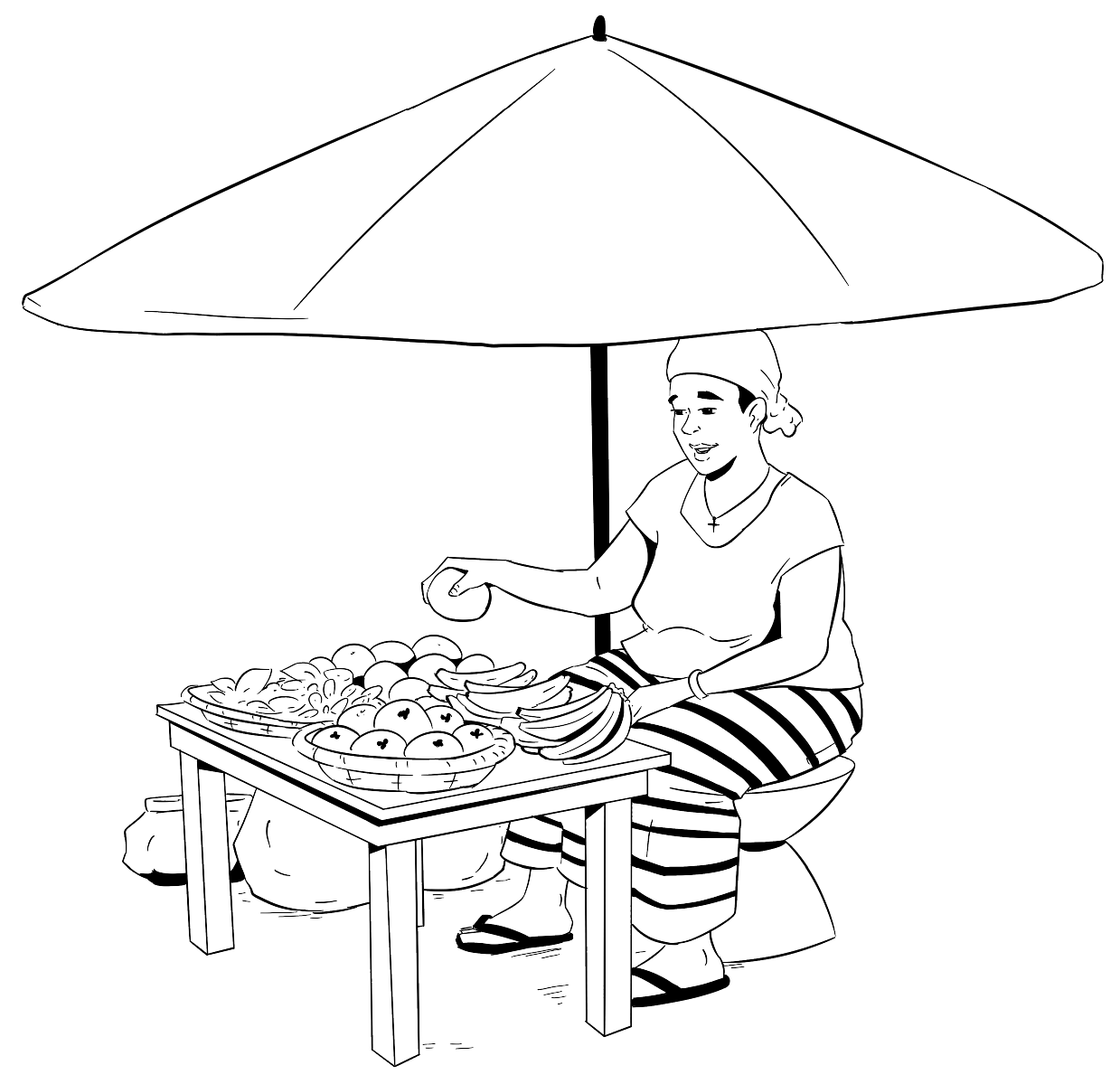
Caught between these two scripts is the Muslim woman facing domestic violence. She is erased by the Religious Intolerance narrative because her suffering happens inside the home and because the data focuses on external persecution of the community (mostly targeting men). Simultaneously, she is erased by the Gender narrative because the data relies on reporting channels she does not feel safe using.

She may fear that reporting her husband to a predominantly Christian police force will bring shame to her minority community or fuel the stereotype that Muslim men are violent. Furthermore, because the “generic woman” in the public imagination is Christian, mainstream shelters may fall short in offering culturally appropriate care, such as halal food, prayer spaces, or female-only staff, effectively barring her entry.

Intersectionality and the Inclusive Data Charter

While understanding intersectionality as a theoretical framework is important, the next step is translating it into actionable policy. To operationalise these concepts, the international development community has turned to frameworks that explicitly link data practices with equity. Foremost among these is The Inclusive Data Charter (IDC), a global initiative coordinated by the Global Partnership for Sustainable Development Data which calls for data systems and practices that will \”account for disparities and be designed for the protection and empowerment of the most vulnerable people in society.\” This principle is indispensable in an era where policy and public services are increasingly data-driven, and where the risk of leaving people behind is greatest for those with overlapping, marginalised identities.

Intersectionality provides a practical framework for realising the IDC\’s vision. It equips decision makers, regulators, and civil society with the proper ideology to design data governance systems that move beyond one-size-fits-all approaches and transition to those that better reflect the complex realities of everyday people. Nevertheless, global charters like the IDC require adaptation to local contexts to achieve meaningful results. Universal standards frequently encounter specific barriers when applied to diverse geopolitical landscapes. Consequently, the next section shifts focus to African data governance, exploring how historical legacies and current technological realities demand a customised, intersectional strategy.

Intersectionality Venn Diagram